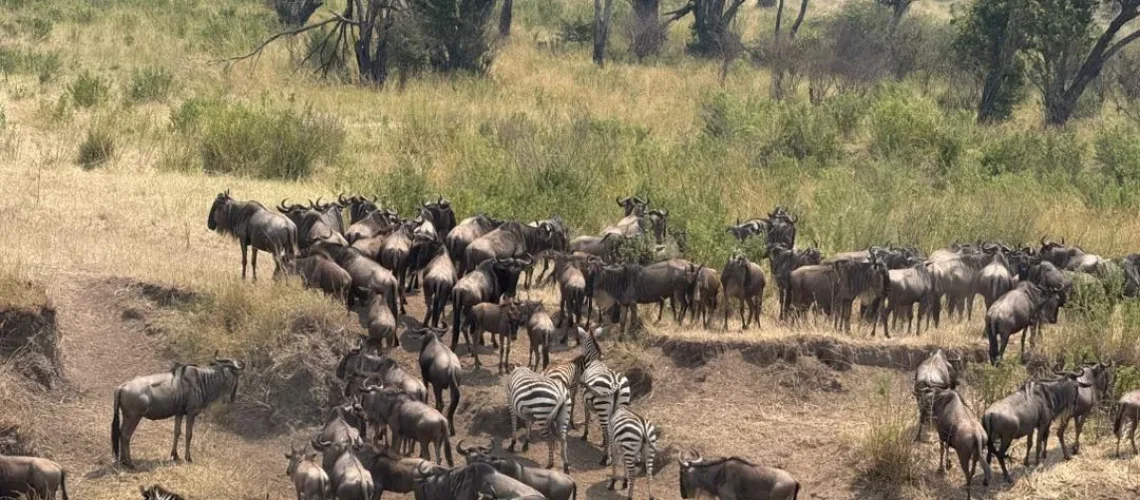
Every year, roughly 1.5 million wildebeest move across the Serengeti in a giant, unbroken circle. Zebras and gazelles join them. Together, they chase the rain and the fresh grass it brings. This journey is called the Great Wildebeest Migration, and it never really stops.
There’s no single best month to see it. Instead, there’s a best month for you, depending on what you want to witness. Do you want to see thousands of newborn calves take their first wobbly steps? Or do you want to watch a herd plunge into a crocodile-filled river? This guide breaks the migration down month by month, so you can plan a Tanzania safari around the exact moment you want to see.
What Is the Great Wildebeest Migration?
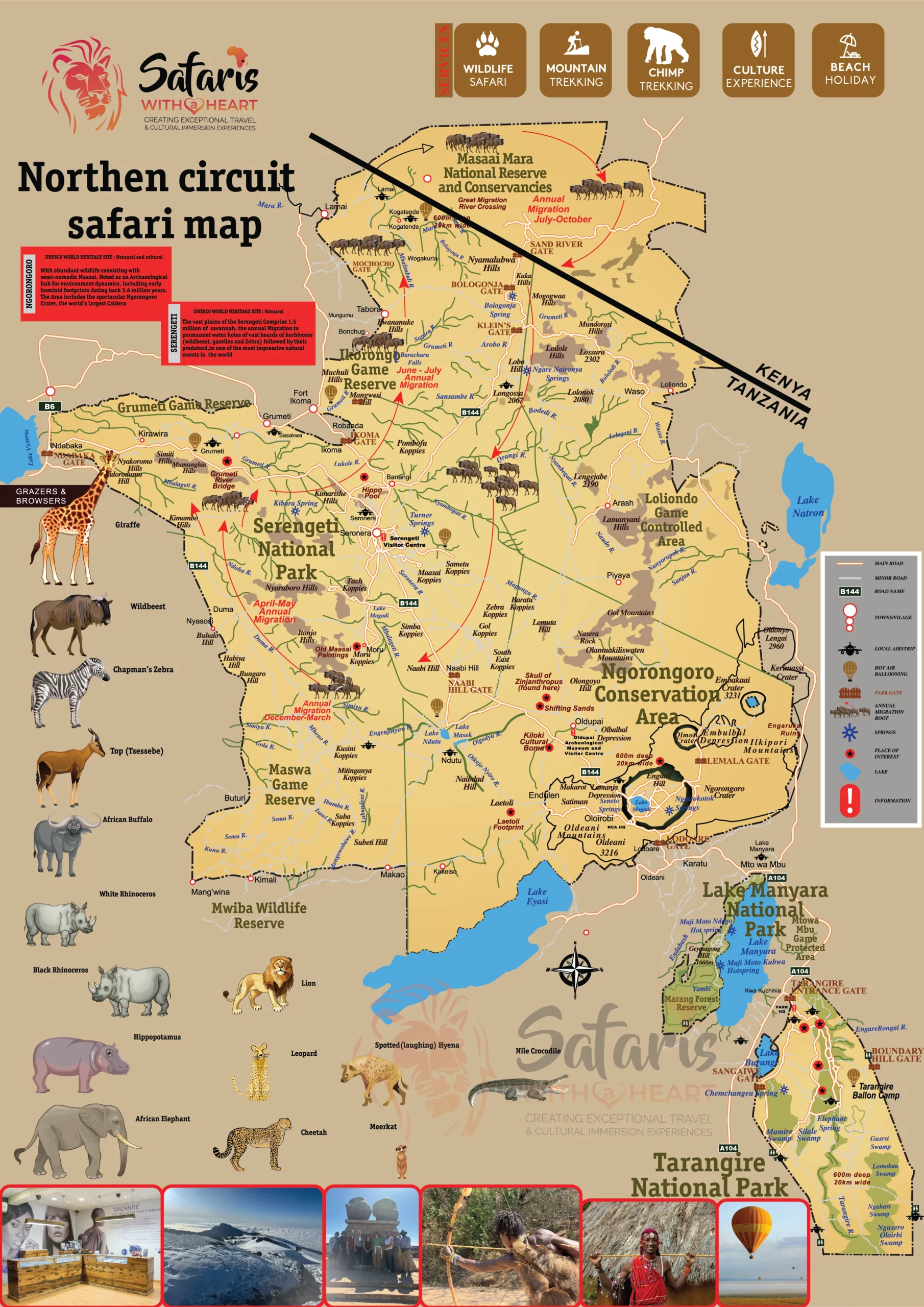
The Great Migration is the largest overland movement of animals on Earth. Around 1.5 million wildebeest travel with 400,000 zebras and 200,000 gazelles. Together, they follow a clockwise loop through the Serengeti-Mara ecosystem, which spans northern Tanzania and southern Kenya.
The herds move for one simple reason: grass. Rain creates fresh grazing. The animals follow it. When an area dries out, they move to the next one. This cycle has repeated for millions of years, and it shapes everything else in the ecosystem, from the predators that trail the herds to the vultures that circle above them.
Because the migration follows rainfall rather than a fixed calendar, exact timing shifts slightly from year to year. Still, decades of tracking give us a reliable seasonal pattern. Here’s how it typically unfolds.
January–February: Calving Season in the Southern Serengeti
The year begins in the southern Serengeti, around the Ndutu plains, Gol Kopjes, and the western Ngorongoro Conservation Area. The grass here is short and nutrient-rich, which makes it perfect for nursing mothers.
This is calving season. Between late January and March, around 400,000 to 500,000 wildebeest calves are born. At the peak of the season, up to 8,000 calves can be born in a single day. It’s one of the most concentrated birthing events in the animal kingdom.
All those newborns attract predators fast. Lions, cheetahs, and hyenas gather nearby, so game drives during calving season often deliver dramatic predator-prey action alongside the heartwarming sight of wobbly-legged calves.
Best for: first-time safari-goers, wildlife photographers, families who want to see baby animals.

March–April: The Herds Begin Moving North
As the short grass plains dry out, the herds start drifting north and west. Long, snaking columns of wildebeest and zebra begin the walk toward central Serengeti.
This period overlaps with Tanzania’s long rains, so the landscape turns lush and green. Fewer tourists visit during this window, which means better rates at lodges and a quieter, more exclusive safari experience — even though the wildlife viewing stays strong.
Best for: budget-conscious travelers, photographers who love dramatic, stormy skies.
May–June: Through the Western Corridor
By May, the herds are moving through central Serengeti, near Seronera, and pushing into the Western Corridor. If the rains fall on schedule, the Grumeti River becomes a major obstacle, and the first river crossings of the year can happen here.
Grumeti crossings are smaller and less crowded than the famous Mara River crossings later in the year, but they’re just as dramatic, with some of the largest crocodiles in Africa waiting in the water.
By late June, the front of the herd typically reaches the edge of the northern Serengeti, setting up for the next big event.
Best for: travelers who want river-crossing drama without the peak-season crowds.
July–September: Mara River Crossings in the North
This is peak migration season, and for good reason. From July through September, the herds concentrate in the northern Serengeti and push across the Mara River into Kenya’s Masai Mara.
These crossings are what most people picture when they imagine the Great Migration: thousands of wildebeest plunging down steep riverbanks into fast-moving water, while crocodiles and strong currents pick off the weak. It’s chaotic, loud, and unforgettable.
September often adds an extra twist. As grass runs low on the Kenyan side, some herds cross back into Tanzania, creating crossings in both directions within the same week. This makes flexibility valuable, since no single camp can guarantee a crossing on any given day.
Best for: travelers chasing the classic “bucket list” migration photo, and those who don’t mind booking well in advance for peak-season camps.
October–November: Herds Return South
As the Mara dries out, the herds start drifting back toward Tanzania. October still offers excellent wildlife viewing in the northern Serengeti, with fewer crowds than the July–August peak.
By November, Tanzania’s short rains typically arrive, turning the southern plains green again. This is the signal the herds are waiting for. Long columns begin the journey back toward Ndutu, setting up for another calving season.
Best for: travelers who want good sightings without peak-season prices, and keen birders, since migratory bird species begin returning around this time.
December: Settling Back Into the South
By December, most of the herd has returned to the southern Serengeti and Ndutu region, grazing on the fresh grass ahead of calving season. It’s a quieter chapter of the migration story, but it’s also a popular time to travel, since it lines up with the festive season and pairs beautifully with a Zanzibar beach extension.
Best for: families traveling over the holidays, and anyone combining a safari with beach time.
Great Migration Quick-Reference Calendar
| Months | Location | Highlight |
|---|---|---|
| Jan–Feb | Ndutu, southern Serengeti | Calving season |
| Mar–Apr | Central Serengeti | Herds moving north |
| May–Jun | Western Corridor | Grumeti River crossings |
| Jul–Sep | Northern Serengeti | Mara River crossings |
| Oct–Nov | Northern to central Serengeti | Return migration |
| Dec | Southern Serengeti | Herds settle before calving |
So, What’s the Best Time to Visit?
There isn’t one right answer — it depends on what you want to see.
- Want newborn calves and big predator action? Go in January or February.
- Want the classic river-crossing photo? Go in July, August, or September.
- Want fewer crowds and better rates? Go in April, May, or November.
- Want to combine a safari with a Zanzibar beach holiday? Go in December.
Because the migration follows rainfall rather than a strict schedule, timing can shift by a few weeks in either direction each year. That’s where local expertise matters. Our guides in Arusha track herd movements year-round, which lets us position you in the right camp at the right time — not just where the migration was last year, but where it’s likely to be during your trip.
Plan Your Great Migration Safari With Safaris With a Heart
At Safaris With a Heart, we design every migration safari around your travel dates, your budget, and what you most want to witness. Whether that’s the raw emotion of calving season in Ndutu or the heart-pounding drama of a Mara River crossing, our Tanzania-based specialists know exactly where the herds are likely to be.
Ready to witness the world’s greatest wildlife spectacle? Start planning your Great Migration safari with a team that lives and works where the migration happens.
