Kilimanjaro Routes Compared: Lemosho vs Machame vs Marangu
Mount Kilimanjaro has seven official routes to the summit. Most climbers, though, choose between three: Lemosho, Machame, and Marangu. Each one offers a different mix of scenery, difficulty, comfort, and summit success rate.
Picking the right route matters more than most climbers realize. It affects how much altitude sickness you’ll face, how many other trekkers you’ll share the trail with, and — most importantly — your chances of actually reaching Uhuru Peak. This guide compares the three routes side by side, so you can choose the one that fits your fitness level, budget, and goals.
Quick Comparison Table
| Route | Duration | Difficulty | Accommodation | Approx. Success Rate |
|---|---|---|---|---|
| Lemosho | 7–8 days | Moderate | Camping | 85–95% |
| Machame | 6–7 days | Moderate–Hard | Camping | 50–85% |
| Marangu | 5–6 days | Easiest terrain | Huts | 30–65% |
Success rates vary by operator and itinerary length. Longer itineraries on every route consistently produce higher success rates, because they give your body more time to acclimatize.
The Lemosho Route: Best Overall Choice for Most Climbers
Lemosho approaches Kilimanjaro from the west, starting in dense rainforest before crossing the Shira Plateau and joining the Machame route on day four. It’s widely considered the most scenic route on the mountain, and it’s popular for good reason.
Why climbers choose it:
- Highest success rates. An 8-day Lemosho itinerary regularly reports success rates in the 85–95% range, thanks to a gradual altitude profile and extra acclimatization days.
- Stunning, varied scenery. You’ll pass through rainforest, moorland, alpine desert, and the summit’s arctic zone.
- Fewer crowds early on. The first few days see far fewer trekkers than Machame, since Lemosho starts on a quieter western trailhead.
The trade-off: Lemosho takes longer than Machame or Marangu, which means a higher cost. For most climbers, though, the extra day pays for itself in summit success.
Best for: first-time high-altitude trekkers, photographers, and anyone who wants the best realistic chance of reaching the top.
The Machame Route: The Popular “Whiskey Route”
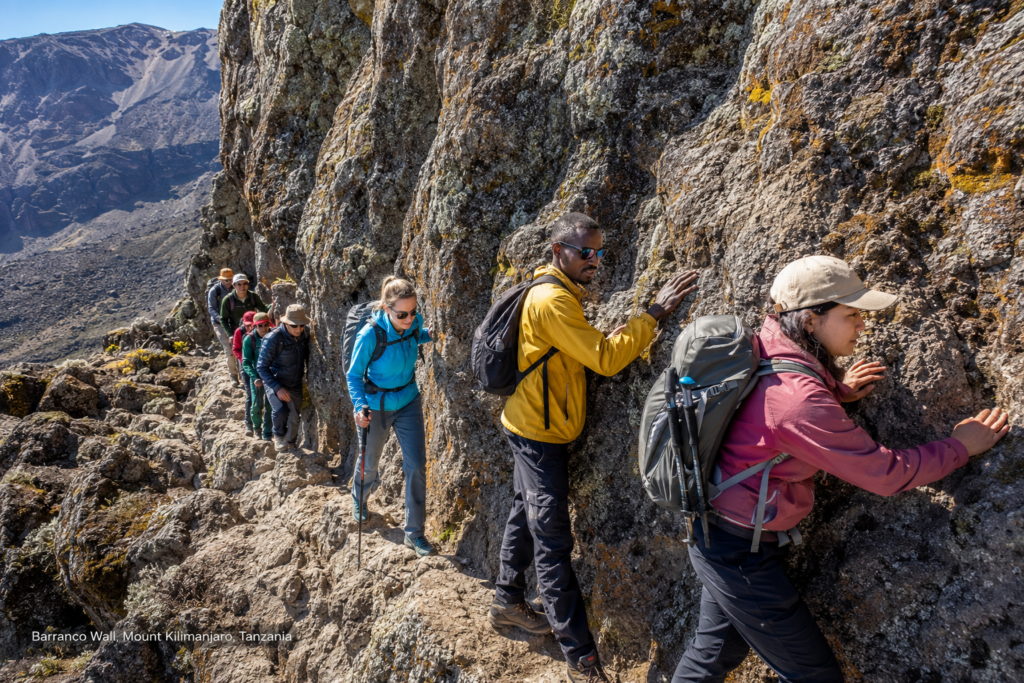
Machame is Kilimanjaro’s most popular route, chosen by roughly a third of all climbers. Nicknamed the “Whiskey Route” for its tougher terrain, it climbs steeply through rainforest and moorland before tackling the famous Barranco Wall — a scramble that looks intimidating but is manageable for most fit trekkers.
Why climbers choose it:
- Excellent acclimatization design. Machame follows a strong “climb high, sleep low” pattern, which helps your body adjust to altitude.
- Good success rates on the 7-day option. A 7-day Machame itinerary typically reports success rates between 70–85%, compared to a noticeably lower rate on the shorter 6-day version.
- Dramatic scenery. Many trekkers rate Machame’s landscapes as equal to or better than Lemosho’s.
The trade-off: Because it’s so popular, Machame gets crowded during peak season (June–October and December–January), especially at the Barranco Wall and summit night.
Best for: fit, active climbers who want a proven route with dramatic scenery and don’t mind sharing the trail.
The Marangu Route: The “Coca-Cola Route”
Marangu is Kilimanjaro’s oldest and most established route — and the only one with hut accommodation instead of tents. It approaches from the southeast on a straightforward path, which has earned it a reputation as the “easy” route.
Why climbers choose it:
- Hut accommodation. No tents to pitch — you sleep in basic dormitory-style huts with shared bathrooms.
- Shorter and cheaper. At 5–6 days, Marangu is usually the fastest and most affordable route up the mountain.
- Gentle gradient. The path itself is less physically demanding than Machame’s steeper sections.
The trade-off: Despite its “easy” reputation, Marangu has the lowest summit success rate of the three routes, often reported between 30–65% depending on itinerary length and operator. The shorter climbing schedule doesn’t give most bodies enough time to acclimatize, and the same path is used for both ascent and descent, which means less varied scenery.
Best for: climbers on a tighter budget or timeline who prioritize comfort over summit odds — ideally on a 6-day itinerary rather than the bare-minimum 5-day option.
Lemosho vs Machame vs Marangu: Which Should You Choose?
If you’re still deciding, here’s a simple way to think about it:
- Want the best odds of reaching the summit? Choose Lemosho, ideally over 8 days.
- Want a proven, popular route with dramatic scenery and don’t mind crowds? Choose Machame, over 7 days rather than 6.
- Want the shortest, most affordable climb with hut accommodation? Choose Marangu, but add a day if your schedule allows.
Across every route, one rule holds true: more days on the mountain means a better chance of standing on Uhuru Peak. If your budget or schedule allows for it, adding even a single acclimatization day can meaningfully improve your odds — regardless of which route you choose.
What Actually Determines Summit Success
Route choice matters, but it isn’t the only factor. Your guide’s experience, the pace they set, your itinerary length, and how well you follow altitude sickness prevention advice all play a major role. A well-run 6-day Machame climb with an experienced team can outperform a rushed 8-day climb on paper — which is why choosing an operator with strong safety practices matters just as much as choosing a route.
Ready to Choose Your Route?
At Safaris With a Heart, our Kilimanjaro specialists help you match the right route to your fitness level, timeline, and budget — then guide you up the mountain with experienced local crew who prioritize your safety and your summit chances every step of the way.
Get a personalized Kilimanjaro route recommendation from our Arusha-based trekking team.
